
Blog
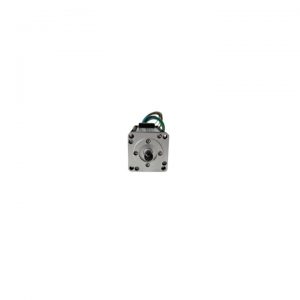
KEB A3.SM.000-62DY Synchronous Servo Motor: Precision, Durability, and Versatility for Modern Automation
KEB A3.SM.000-62DY Synchronous Servo Motor: Precision, Durability, and Versatility for Modern Automation
Introduction
The A3.SM.000-62DY is a permanent-magnet synchronous servo motor from the SM series of KEB Automation (Karl E. Brinkmann GmbH), a German manufacturer of drive and motion-control technology. Rated at 2.0 kW output power, 3,000 r/min rated speed, and 6.37 Nm rated torque on a 400 V AC three-phase supply, it is engineered for industrial automation applications that need a compact motor with genuinely dynamic, repeatable performance. This article examines the product’s design, its advantages, and the application scenarios where it delivers the most value.
Design and construction
The motor belongs to KEB’s SM synchronous servo family, which is built around high-energy permanent-magnet rotors and a compact, sturdy die-cast housing. It is supplied in B3 foot mounting with a standard keyed shaft, uses natural-convection air cooling, and carries an IP54 protection rating that shields the windings and bearings against airborne dust and incidental water splash. Rated operation covers a reported ambient range of about −20 °C to +40 °C, which is representative for panel-mounted and machine-mounted servo duty. These choices — no external fan, no liquid cooling, robust enclosure — are the foundation of the motor’s low-maintenance character.
Product advantages
The first advantage is dynamic response. The rotor inertia of the A3.SM.000-62DY is matched to the loads it is designed to drive, allowing rapid acceleration and deceleration with accurate positioning. In applications with high cycle rates — pick-and-place stations, indexing units, automated assembly lines — this means the motor follows the commanded motion profile closely, and throughput is not lost to slow or overshooting axis movements.
The second advantage is precision at speed. Synchronous servo construction combined with precise manufacturing gives low cogging torque and smooth rotation even at low speeds, which is exactly what fine positioning and delicate material handling require. The feedback system completes the picture: KEB’s SM series offers a two-pole resolver as the standard feedback device, with incremental encoders and absolute encoders (single- or multi-turn versions, including Hiperface and BiSS-type interfaces) available as options. The unit in question is listed with an incremental encoder, which measures speed and position directly on the motor shaft for high control quality. This feedback flexibility lets the same motor platform serve everything from simple speed control to high-resolution positioning.
The third advantage is reliable thermal management. Because the motor uses natural convection cooling, there is no blower to maintain and no cooling circuit to leak. KEB servo motors are manufactured with insulation class F as standard, and the air-cooling architecture draws heat away from the stator windings effectively, supporting continuous duty at rated speed without thermal overload. For machine builders, this translates into fewer components, lower maintenance, and dependable performance across long production shifts.
The fourth advantage is environmental robustness. The IP54 enclosure allows the motor to operate in conditions where open-frame motors would fail quickly — textile mills full of fiber dust, woodworking shops thick with chips, and general factory floors with airborne particulates. The die-cast housing further contributes to durability in demanding, vibration-prone installations.
The fifth advantage is seamless drive-system integration. The A3.SM.000-62DY is designed to work with KEB COMBIVERT servo drives, forming a matched drive-and-motor package with high-accuracy closed-loop control. Commissioning is performed with KEB’s Combivis software, including encoder and commutation calibration, so the system can be tuned to the specific machine quickly and reproducibly.
The sixth advantage is configuration flexibility. KEB offers modular options across the SM series — holding brakes, keyed or keyless shafts, straight or right-angle connectors, and thermal sensors such as PTC elements — allowing the same base motor to be adapted to different machine requirements without changing the core design.
Application scenarios
In industrial robotics, the A3.SM.000-62DY serves as a joint actuator where torque and speed are both required, delivering stable, vibration-free motion that supports assembly, welding, and material-handling tasks. In packaging machinery, it drives sealing jaws, conveyors, and indexing axes in horizontal form-fill-seal machines and cartoners, where precise axis synchronization determines seal quality and material waste. In textile machinery, it is deployed on looms and spinning frames, where its IP54 protection withstands fiber dust while its torque maintains tension on heavy fabric rolls without slipping. In woodworking and CNC equipment, it powers routers and similar machinery, combining the torque needed to cut dense materials with protection against wood chips and debris. In general automation and material handling, it suits conveyors, positioning stations, and other medium-duty axes requiring dynamic, repeatable motion.
Selection and commissioning notes
The motor is designed for a 400 V AC three-phase industrial supply and B3 foot mounting, with a standard keyed shaft. Before installation, verify that the mounting surface is flat and rigid; during commissioning, connect power and feedback cables per the pinout, then perform encoder and commutation calibration in Combivis. Routine maintenance is limited to periodic checks of cables, bearings, and cooling-fin cleanliness — the practical consequence of its fan-free, liquid-free design.
Conclusion
The KEB A3.SM.000-62DY combines dynamic performance, precision, environmental protection, and drive-system compatibility in a compact 2.0 kW package, supported by modular options and a strong global service network. For machine builders and plant maintenance teams alike, it is a dependable, low-maintenance motion component that earns its place in the machine it serves.